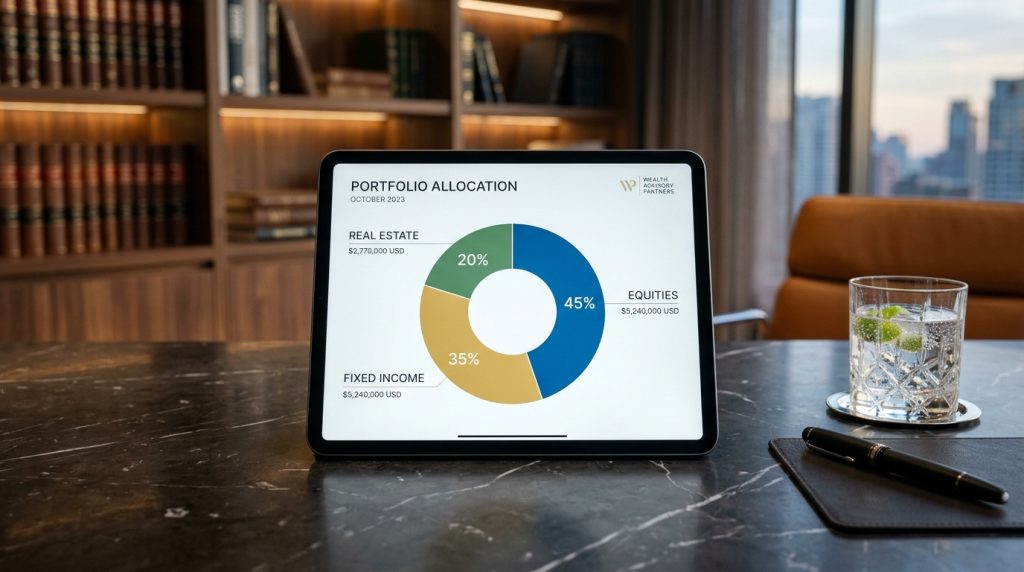
Once a household has successfully maximized “the gap” between its revenue and expenditures, it faces a new, institutional challenge: shielding that retained capital from the destructive forces of inflation and converting it into a self-sustaining cash flow engine. Leaving your wealth in standard cash deposits is a guarantee of financial erosion. To achieve permanent career autonomy, you must transition from a saver into an allocator of capital.
In the arena of wealth management, your investment portfolio is the mechanical engine that funds your freedom. However, building a portfolio for financial independence requires a completely different risk architecture than investing for conventional retirement. When your goal is to live off your assets early in life, your allocation must strike a precise balance between aggressive growth and defensive preservation. This comprehensive report deconstructs the core asset classes of the independence movement, evaluates foundational portfolio models, and outlines the structural mechanics of rebalancing.
Part 1: The Building Blocks of the Freedom Engine
To construct an ironclad portfolio, you must understand the specific economic functions of the primary asset classes. A truly independent portfolio relies on diversification to weather shifting macroeconomic cycles—such as high inflation, market recessions, or currency devaluation.
1. Equities (Broad-Market Index Funds)
Equities represent the primary growth engine of your portfolio. For long-term financial independence, individual stock picking is replaced by low-cost, broad-market index funds, such as those tracking the S&P 500 or the Total World Stock Market.
- The Function: Equities act as a powerful hedge against inflation. Over multi-decade horizons, broad equity markets have historically delivered a ~7% inflation-adjusted annualized return, driven by corporate productivity and global economic expansion.
- The Risk: High short-term volatility. Equities can experience severe drawdowns during bear markets, requiring a strong psychological stomach and a long investment horizon.
2. Fixed Income (Bonds and Treasury Instruments)
Fixed income assets represent the defensive shield of your portfolio. These include government bonds, corporate bonds, and short-term Treasury bills.
- The Function: Bonds provide stable, predictable yield coupons and act as a deflationary hedge. During intense equity market crashes, bonds typically hold their value or appreciate as capital flees to safety, providing the necessary liquidity to fund living expenses without selling stocks at a loss.
- The Risk: Low long-term returns. Over-indexing on bonds will protect your capital from market drops, but it risks exposing your portfolio to purchasing power erosion from inflation.
3. Real Estate (Direct Ownership and REITs)
Real estate serves as a hybrid asset class, offering both structural capital growth and immediate cash flow.
- The Function: Rental properties or Real Estate Investment Trusts (REITs) generate consistent monthly passive income that directly offsets your household’s baseline monthly fixed overhead. Furthermore, rental rates naturally scale up with inflation, preserving your purchasing power over time.
- The Risk: Direct real estate requires active operational management (tenants, maintenance), while REITs carry high sensitivity to interest rate fluctuations.
Part 2: Portfolio Models Compared
Financial architects have designed specific allocation frameworks tailored to different risk tolerances. Below is a structural analysis of the three most reliable portfolio models utilized within the independence community:
| Portfolio Model | Asset Composition Breakdown | Primary Core Philosophy | Ideal Investor Profile |
| The Total Stock Vanguard (The Aggressive Path) | 100% Broad-Market Equities (e.g., VTSAX or VT). | Maximizes compounding velocity and long-term capital growth by accepting total market volatility. | Young investors with ultra-long horizons, high emotional discipline, and flexible spending habits. |
| The Three-Fund Portfolio (The Classic Balance) | 60% Domestic Equities, 20% International Equities, 20% Total Bond Index. | Provides cross-border corporate exposure balanced by a structural fixed-income buffer to cushion market drops. | The baseline standard for mainstream financial independence; highly balanced and easy to manage. |
| The Golden Butterfly (The Defensive Fortress) | 20% Domestic Stocks, 20% Small-Cap Value, 20% Long-Term Bonds, 20% Short-Term Bonds, 20% Gold. | Engineered to survive all economic quadrants (prosperity, recession, inflation, and deflation) with minimal drawdowns. | Investors highly vulnerable to Sequence of Returns Risk who prioritize capital preservation over raw growth. |
Part 3: The Mechanical Protocol of Rebalancing
A portfolio is not a static structure; it is a dynamic organism. Over time, different asset classes grow at different rates. In a strong bull market, your equity allocation might surge from a targeted 70% up to 85%, leaving your household heavily over-exposed to the next inevitable market correction.
To maintain your designated risk perimeter, you must execute a strict Rebalancing Protocol at regular intervals (e.g., annually or bi-annually).

Rebalancing forces you to systematically execute the oldest rule of investing: buying low and selling high. If equities have surged and bonds have dropped, you sell a slice of your winning stocks to purchase more out-of-favor bonds.
The Rebalancing Strategy: To avoid triggering capital gains taxes in taxable brokerage accounts, execute your rebalancing dynamically. Instead of selling your winning assets, simply direct 100% of your incoming monthly investment capital toward the underperforming asset class until the portfolio’s structural ratios naturally return to their baseline targets.
Conclusion: The Automated Engine of Freedom
Ultimately, the technical configuration of your portfolio is secondary to the consistency of your execution. A perfect asset allocation strategy will fail if you panic and liquidate your assets during a market downturn.
The true secret to portfolio success is the total removal of human emotion. By utilizing automated index fund contributions, maintaining a diversified allocation that matches your psychological risk tolerance, and employing a disciplined rebalancing protocol, you transform your wealth into a professional machine. Your portfolio stops being a speculative gambling account and becomes what it was always meant to be: a self-sustaining financial utility company that pays you a permanent dividend, funding your absolute personal freedom for the rest of your life.